
May assist in
- Skin Wounds
- Ulcers
- Insect Bites
- Stings
- Bed Sores
- Cracked Heels
- Fever Blisters
- Wrinkles
- Lipbalm
- Sunburn
A thicker balm, not a thin oil
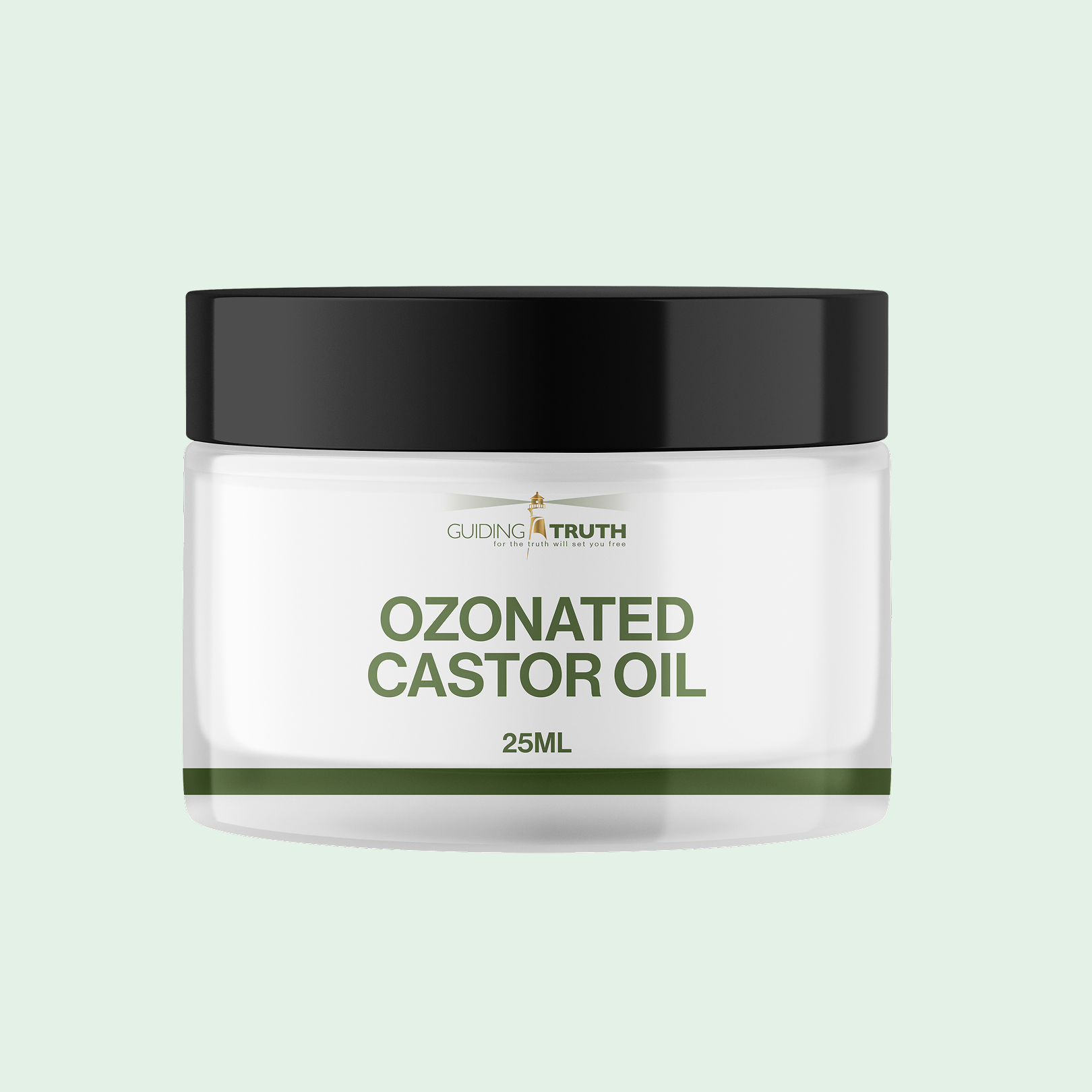
Plain castor oil can sit thin and greasy on the skin. Ozonating it changes the feel completely: it sets into a richer, skin-friendly balm you can smooth onto the spots that need it, rather than something that just runs off.
Where people reach for it
Kept in the fridge, used as you need it
Ozonated oils keep best cold. Store it in the fridge, out of direct sunlight, and smooth a small amount onto the area as needed. It is for your skin only, so keep it clear of the eyes and do not swallow it.
Not sure if ozonated castor oil is the right pick, or which size to start with? You do not have to guess. Anita, the natural-health practitioner behind Guiding Truth in Nelspruit, knows the whole range and is glad to help you choose. Send her a message and a real person, not a call centre, will help you find the product that fits. She does not diagnose or prescribe, so for anything medical she will always point you to your doctor first.
Ozonated castor oil** (topical).
For external use only. Apply a small amount to the affected area of skin as needed. Avoid contact with eyes.
Keep out of reach of children. Do not use during pregnancy or breastfeeding. Do not take with anti-coagulants. Sugar and gluten free. Keep out of direct sunlight and store in the fridge. Avoid contact with eyes.
This is an unregistered complementary medicine that has not been evaluated by SAHPRA for its quality, safety or intended use. It is not intended to replace any prescribed medication. Consult your healthcare practitioner before use.
It is castor oil that has been ozonated until it sets into a thicker, skin-friendly balm. It is for external use on the skin only.
Smooth a small amount onto the area of skin as needed. Keep it away from your eyes and do not swallow it.
Ozonated oils keep best cold. Storing it in the fridge, out of direct sunlight, helps it last.
Yes, many people use it as a lip balm and on areas like fine lines. Keep it clear of the eyes.
The 25ml is handy for trying it or keeping in a bag. The 50ml lasts longer for regular use at home.
